Wednesday, October 6, 2010

The Adventure Continues....

October 6, 2010

As we neared the end of September, our students were taken on a tour of a local winery here in Abruzzo named Madonna Del Carmine. Mrs. D’Alessandro arranged the tour on our behalf and arranged for the wine maker to give an instructional tour of the winery. We witnessed the various stages from the grapes being brought in on trucks and wagons; to them being weighed; measured for sugar content; then dropped into a hopper that separated the stems and crushed the grapes; and then seeing how the juice is extracted, fermented and stored. At the end of the tour we were treated to a wine tasting which everyone enjoyed. It was a wonderful way to end the day on a Friday.


Now that is how to fill a wine bottle!


 Last Sunday afternoon, about a third of the students visited the Rutherford’s apartment to watch “The Blind Side” together.


An arm wrestling contest was held on Wednesday after school. Suffice to say that the teachers did not walk away with any of the hardware!

We have just returned from a two day trip that included Naples, Pompeii, Sorrento and Amalfi.

Built in the 17th C for the Bourbon King Charles III, the Palace Reale in Caserta (Naples) is Italy’s largest royal palace and the last example of Baroque architecture built on such a scale in all of Italy. After entering the massive entrance hall, the students were given a guided tour of the actual building looking in the throne room, the king’s private bedroom as well as other estate rooms. There are 1200 rooms here, not all of which are open for public viewing. Then we spent time in the massive gardens. There is water course from the mountains above that feeds chain of water works, fountains and statues that depict stories from mythology. All in all, the entire estate was impressive - just the objective that the architects and designers were seeking to achieve.


Equally impressive was Pompeii which was a leading cultural and trading town populated by wealthy Romans. It was destroyed in 79 A.D. after Mt. Vesuvius erupted in a series of explosions. The unfortunate citizens were either buried by collapsing buildings or suffocated where they were by poisonous gases. The town was encased in some 6 m of ash that soon hardened and preserved them until the town was discovered a few hundred years ago. It is a jewel that provides archaeologists and historians with a clear insight into the life and times of these ancient people.
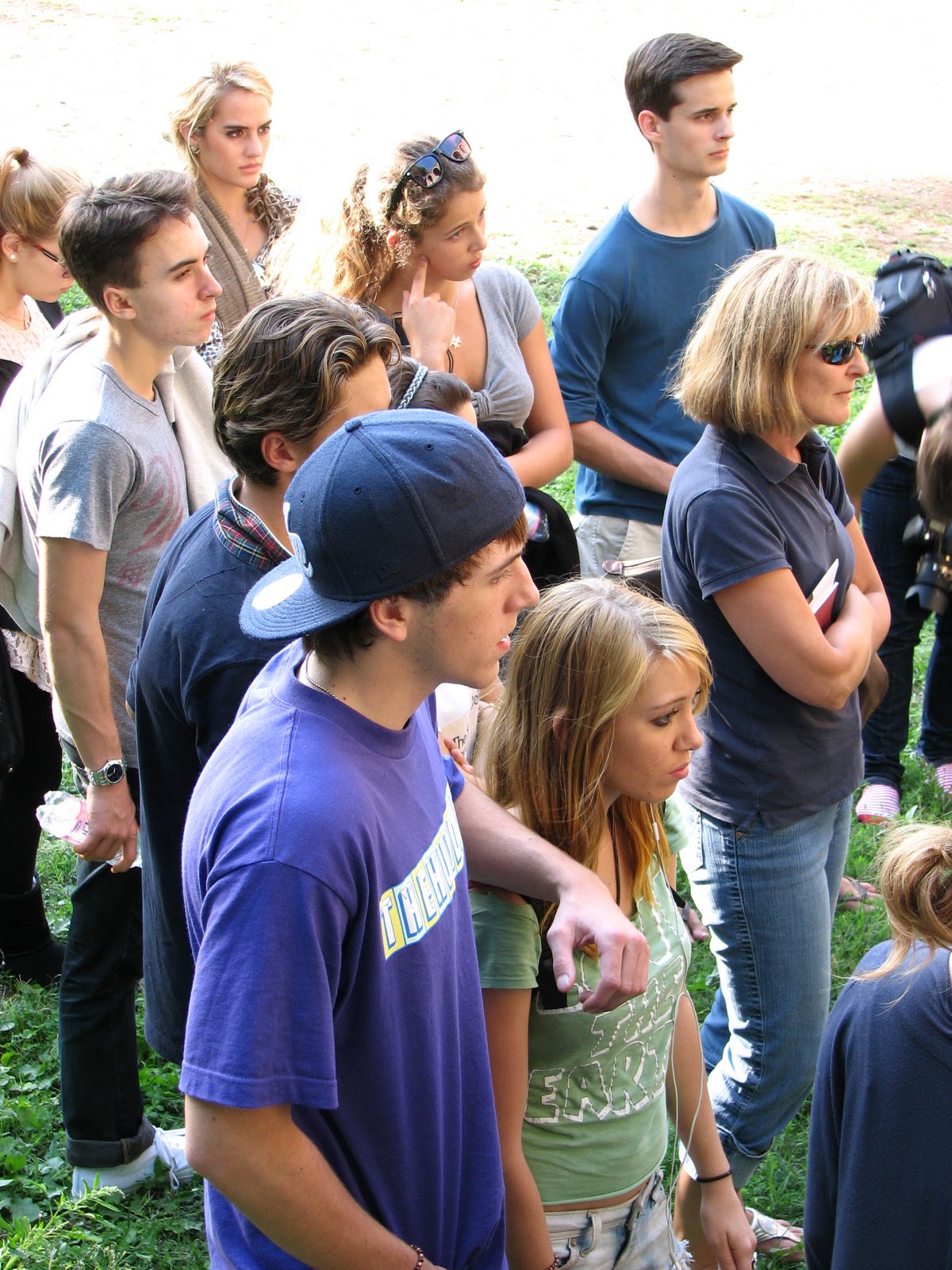


We had two wonderful guides that taught us about how the people of Pompeii lived, how they designed their houses, how they designed their city, and what activities they were engaged in when they all suddenly died.


Admiring wall frescos in a Patrician's home


Leaving Pompeii behind, we then drove down to Sorrento, a beautiful town that sits perched on cliffs above the sea. It is from this port that we boarded our chartered boat that took us down the rugged coastline past Positano to Amalfi.


On the way to Amalfi.


Positano


Many of us remained in Amalfi – some to swim, some to shop, some to simply walk and take in the sites. A few others travelled by cab to the top to the small town of Ravello, a much quieter town that offered magnificent views of the Adriatic.


The View from Ravello

We were all sad to leave these gorgeous towns that certainly live up to their reputation for beauty.  


Thursday, September 23, 2010

Croatia Trip - Split and Trojir

Recently, some 46 CCI student accompanied by 8 faculty and staff travelled to visit Split and Trojir in Croatia.

We left CCI right after school ended on Friday afternoon and travelled on the CCI bus to Ancona boarding our ferry boat for the overnight journey to Split. It was a warm evening and the Adriatic Sea was calm giving us a smooth passage.

At 7:00 a.m. the next morning we disembarked in Split and walked to our hostel to drop off our luggage. The students were thrilled with the rooms. They didn’t care that they were clean and tidy. Rather, what excited them was the computer access in each room. It was a race to see who get on Facebook first!

There is a wonderful Saturday morning green market that occurs whereby farmers bring in their fresh produce for sale. The pastries were also a hit with everyone.


Morning tours were conducted of the Diocletian Palace. The Roman Emperor Diocletian returned to his birthplace in Salona near Split towards the end of his career and launched a ten year building programme of his fortified retirement home. When it was finished, around 305 AD the entire structure covered 31,000 sq. m. One can see from the photos that the streets, the imperial palace, military fortress and fortified town were built of the local limestone which looks and feels remarkably like marble. Attending to details, Diocletian imported marble columns from Italy and Greece as well as sphinxes from Egypt. Today, it is the most extant Roman ruin and remains an impressive site to tour.

Modern day Split surrounds the palace. The palace itself is a thriving commercial centre. Its narrow streets flow into and emerge out of a number of open courtyards housing many shops and outdoor cafes. There is a healthy mix of the modern and ancient worlds.


Following the tours, students went off for lunch before the afternoon tours. Many found their ways to the courtyard cafes or those along the waterfront adjacent to the western wall of the palace. This is a busy tourist area as well as a delightful place to eat and to people watch.  


In the afternoon, we toured the underground caverns, in essence the storage and workshop areas of Diocletian’s imperial palace. An ancient stone olive oil press still stands, seemingly ready for use. One could imagine the storage of grains, water, spices and other necessities in these massive chambers. We all found ourselves marvelling at the intricate brickwork evidenced in the walls themselves


Students were given time in the late afternoon for shopping and to go and enjoy dinner out with their classmates before retiring for the night.


The Waterfront at Split

Late Sunday morning, we took a local bus to and from Trojir some 40 minutes away. Like Diocletian’s Palace, this is another fortified town built of limestone on the coast. Both are a tangle of narrow curving streets that weave and seemingly wander through the town. Some are barely wider than one’s shoulders! Unlike the one massive church tower in Split, Trojir boasts a number of such bell towers.

Originally settled by the Greeks and followed by the Romans, Trojir was finally settled by the Coats in the 6th C. Between the 10th C and 14th C, the Croats tried to fend off the Venetians until they finally fell to them. For the next four centuries, Trojir was occupied and inhabited by the Venetians until Napoleon dominated it. From then on it changed hands a few more times before it came back into the control of the Croats.

 
Trojir

Narrow Streets - wide enough for two


The fortress that guards the harbour

After spending an afternoon touring this town and its fort at the mouth of the harbour, we returned to Split in time to collect our luggage and board the ferry for our return overnight trip to Ancona.


It was a weary 54 people who disembarked on Monday morning. Strange as it may seem for having lived for only a month in Italy, but it felt like we were home.

The noise level on the bus during our return to Lanciano was minimal as almost half the students were asleep during the journey.

Cruel Head of School that I am, classes were scheduled for the students that afternoon.